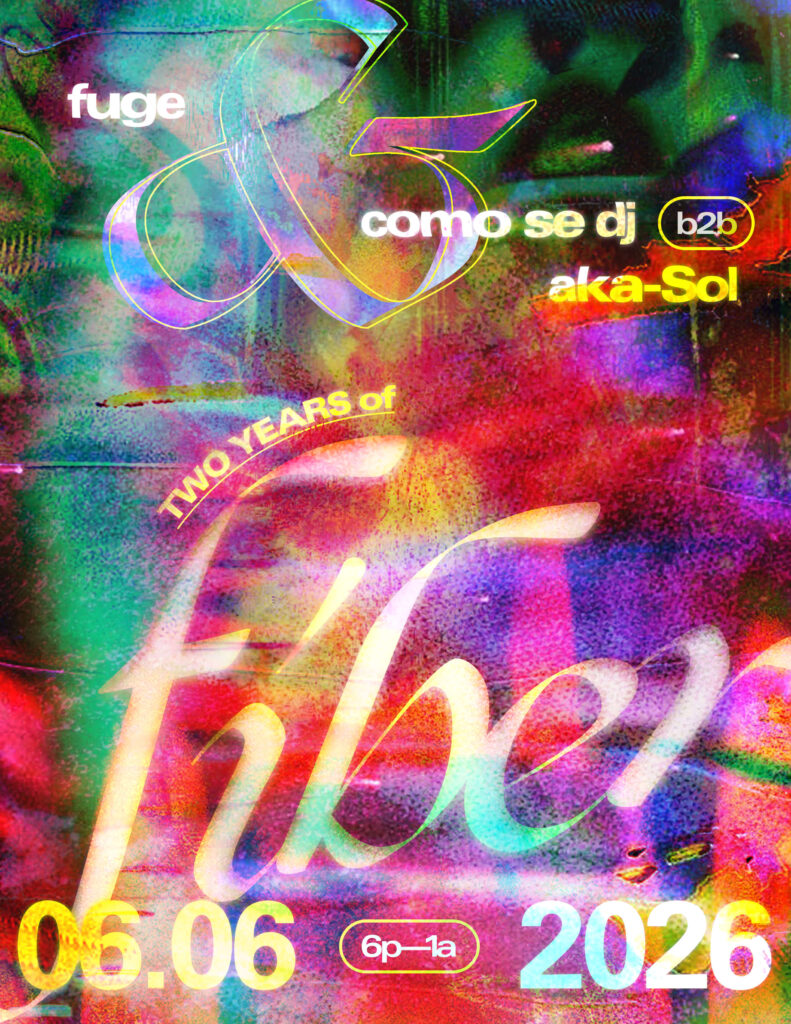
lineup
- fuge
- aka-Sol b2b como se dj
menu
appetizers
- Tfayah (Moroccan Sauce with Caramelized Onions, Raisins, and Honey) (GF)
- Taktouka (Spicy Moroccan Dip with Roasted Peppers and Tomatoes) (Vegan, GF)
- Multi-seed Teff Sourdough (Vegan)
- Casteltravano Olive, Jalapeno, and Za’atar Focaccia (Vegan)
- Beet Dip with Labneh (GF, contains walnuts)
- Garlic Scape Butter (GF)
- Curried Lentil and Maduro Patty Pie
salads
- Laphet Thoke (Burmese “Fermented Tea Leaf Salad”) with Shan Tofu (Vegan)
- Charred Scallion Potato Salad with Tahini and Celery (Vegan, GF)
- Quinoa and Brown Rice Tabbouleh Salad with Cucumbers and Peppers (Vegan, GF)
mains
- Efo Riro (Yoruba Vegetable Stew) (Vegan, GF)
- Watercress Pie (contains sesame and walnuts)
- Cauliflower Eggah with Fermented Hot Shatta (GF, has almonds and Shatta has pepitas)
- In the Rice Cooker: Millet (Vegan, GF)
- Ater Kik Alicha Wot & Suf FitFit (Vegan, GF)
- Smashed Zucchini With Chickpeas and Peanuts (Vegan, GF, contains peanuts)
- Miso Rice Cakes With Spinach and Peas (Vegan, GF, contains sesame)
- Bibim Guksu (Korean Cold Spicy Noodles) (Vegan, contains sesame)
desserts
- ara’s Quindão
- Baru Frangipane and Tart Cherry Pie (contains nuts, GF)
- Two Years of Fiber! Maraschino and Dark Chocolate Checker Cake
- Açaí Tart with Coconut Yogurt and Brazil Nuts (Vegan)
- Watermelon Ice Cream (not Sorbet!!!) with Basil Cookies
- Apple Cake with Walnuts and Raisins (contains walnuts, alcohol)
- Chocolate Pudding Pie with Pretzel Crust (Vegan)
- Peach Crumble (Vegan)
- Happy Birthday Fiber! Rainbow Sprinkle Cake
- Earl Grey and Coffee Tiramisu for Jo
beverages
- Lactofermented Strawberry Milk (Vegan, GF)
- Caju Fruitbucha (Vegan, GF)
- Iced Buckwheat Tea (Vegan, GF)
post-midnight snacks
- Passionfruit Truffles (GF)
- Salted Cashew Brittle (contains nuts, Vegan)
lore
Hi, friends. This one came up so fast, but we had to fit it in before Dripping and some summer travel. It’s been just four weeks since we last saw you, but we all need to celebrate our “gentle-yet-wild” 2-year anniversary party. Fiber already walks! Thanks to everybody who has supported this project so far – it really changed our lives in ways we haven’t anticipated; ways that have brought all of you close to us, where we have been able to create a different kind of gathering, one about sharing tenderness and weirdness, about nourishment for the physical, artistic, and communal body.
The “gentle” half of this celebration is because it’s hot and the days are long and the food will be a little fresher and lighter; the dinner hours will be sunnier and more laid-back. The “wild” side has to do with its line-up: we are bringing back two artists that drove you all into the sexiest frenzy on the dancefloor last year. Yes: we’re having Fiber favorites como se dj and aka-Sol back for to finish off our weary hearts, entwining us in low end psychedelia and maximalist romance, because here we are all lovers and we don’t hit it and quit it. Our resident fuge will be on the decks edging during dinner, dragging the drums through the oozing, foggy, digital swamps.
Our bb Matük just released a sexy new album just in time for all of your sweaty summers. Check out the video for Ricotta (with Fedra and Brava) to catch some of the Fiber fam in supporting positions. There’s a big celebration with many of our Bliss Point homies on June 27 at that secret loft in Bed-Stuy. Also at that same loft in Bed-Stuy, we’re teaming up with one of our favorite parties, Heat Index, for something the Saturday after Dripping, June 20. Watch this space for more.
This go round we arranged for our friends at Liminal Yoga on the 2nd floor to host a class before Fiber, for anyone who wants to get good and limber before eating and dancing, starting at 5:30pm. We have seen the faces leaving these classes and let’s just say they wear the bliss that we always want to carry with us. There is an add-on in the shopping cart for anyone who wants to join.
Lastly, have you ever wanted to study critical theory with other ravers and learn a bit more about how it can inform what we do and how we might be able to schematize what we do with our weekends? Rather than learn how to write or think about the rave, this class explores how to rave in practice. Our friend Geoffrey Mak, author of the great memoir Mean Boys and the upcoming rave novel, Total Depravity, is putting together a course called Rave Methods (with help from our very own Chris/fuge) – rigorously applying contemporary approaches in aesthetic theory from Continental philosophy to queer psychoanalysis, to open up radical possibilities of confrontational leisure, strategic resistance, and collective transformation. This course, mixing lecture and deep conversation, welcomes nightlife workers and producers, and anyone who’s tired of raving on autopilot (or if you just want to understand nightlife with a critical lens and meet the weirdos who would sign up for this kind of thing). This will run every week from July 4th until Honcho, so clear your calendars. There are still a few spots left, but the course will be small to facilitate rich discussion.
LORE: WOODSTOCK
Festival season is upon us, and although Movement is over – and you may have seen Angee representing New York City at the front left – this Fiber serves as a bit of a send-off for the season to come. Dripping is just some 10 days away to make us dream bigger about what we can do when art and community are the focus (and there’s System Activate, ZAP Outdoorz, and the ever-present Sustain-Release still to come on the east coast).
I (Aline here) am already preparing for this festival season by going back to “the source”: Woodstock. Have you ever watched the 4-hour long documentary? You should. The cars were beautiful, the clothes were beautiful, and there was no blueprint for what a rock festival should look like. I’m not going to pretend that I don’t find those images romantic, even if I know that there were tons of contradictions in play there. It was all more DIY, more impromptu and chaotic, which is not devoid of charm. The kids in the mud, the folk songs (some of the music is mid, but then you realize that the folk revival was peaking only 5 years before this), highways closed, emergencies declared, an entire string of small towns marshalled to feed and house the almost 500,000 people en route a farm for three days with little infrastructure sounds terrifying and prehistoric, but also alluring.
I spent a lot of time thinking about these images. They make me yearn and burn with a very specific kind of nostalgia; the kind you get when you’re 10 and acknowledge some facts as profound and cry (no words available to accurately express your spirit). It is the feeling of one-ness that these images express, the joy in clearly turbulent times, the lack of telephones, and the erratic embrace of serendipity. And the outfits, of course.
I come from Salvador, Bahia, a city that is legendary for its massive street carniva: four millions of people on the streets for days, walking and dancing and surrendering to the rain and occasional mud. Itself not a festival, but I see parallels between it and the Woodstock images, because all of these festivals are our carnivals for our communities. It was a mistake to not go to carnival this year, and maybe this is why this documentary hit me so hard. I highly recommend a cathartic festival-esque experience for you soon. No phones, lots of people, lots of music, and LOTS of improvisation. Have a special Summer!
LORE: POWER DYNAMICS IN COMMUNITY SPACES
Last newsletter, we wrote about what identity means in a community, and the situationship inherent in the chemically-enhanced, dancefloor-induced solidarity, and the conflation between the byproduct of the communal affection and the community itself. In fact what holds together a community is the resilience born from trust between its members, built over time.
When the byproduct – that is, affective unity – usurps the foundational trust itself, then the line between community and cult becomes blurred in that there will always be a scapegoat that is required to sacrifice their own needs for the illusion of cohesion. All decisions made from a position of power and responsibility carry an implicit list of priorities about the resources and people influenced by that decision, regardless if that position is ethically legitimate or not. For corporate settings, HR will prioritize anything from cost-efficiency to legal liabilities rather than the well-being of its staff when push comes to shove. This cynical perspective is the one that the “communities” of tech-oligarches, fascists, and the authoritarians use to rationalize decisions in which the means justify the ends. From business sustainability to trans-humanist AI psychosis, the ends displace their own moral justifications in the first place by placing the human cost as secondary instead of integrating that as a fundamental responsibility of power assumed in democratic social contracts, despite the long political and evolutionary history of best outcomes for all being achieved by communal efforts.
Our communities unfortunately do not exist outside of the systemic conditions that we’ve inherited, and the myopic perspective here is to ignore what these systemic conditions demand of us to achieve a vision where it is no longer necessary to embed a system of ritual sacrifice in the organizational structures we create. The pathology that demands the suppression of the scapegoat is the same regardless of the packaging, but the specificity of the packaging requires different strategies and tactics to undo. We’ve written about how generosity is often the first step towards accountability and trust, but generosity is often conflated with martyrdom. Engineering a position of sacrifice becomes a pathway to resentment when the engineer sees themselves as a martyr. This is not to say that there is no generosity in martyrdom, but rather that when the means with which one can give with surpasses what one can sustainably maintain, the seeds of resentment are sown when that sacrifice is, reasonably, not reciprocated, leading to harm.
We all have different roles in our lives, but the fact that we are individuals who make choices precede the roles. We are not our role labels, but what we choose to do each day. Even then, the roles we inhabit come with different systemic and intersectional implications and responsibilities. Roles themselves carry different interests, but the viability of achieving one’s own interest is dependent on the power differential between these roles. We act and respond accordingly to those implications and responsibilities towards those interests. When those interests are aligned operationally to sustain a community, then the community becomes self-empowering, but conflicts of interests between the necessary roles in a community is the norm. The self-awareness that one has about the power differential and the systemic implications of that role, and how they decide to show up in actions with those around them, determines the priorities within a community. Recognizing how each role then presupposes different relational obligations is crucial in defining the terms of accountability and integrity that is demanded of one’s choice in the role they decide to take on. Without that self-clarity, the possibility of accountability becomes foreclosed, and the whims of the powerful become the unspoken priorities of the community itself.
How many of us have heard from one manager or another that “we’re a family,” but then when we’re laid off or fired, it becomes just business? Or when your CEO emails everyone about how “we’re all in this together” until it comes to the compensation and hierarchy? Roles are themselves chosen, sometimes coerced by responsibility, sometimes driven by self-image, other times driven by material circumstances. Why one chooses a role can lead to differences in how one shows up in that role. When the role is tied by self-image, such as being the martyr, any challenge to that self-image becomes the priority. When it is driven by a sense of commitment and responsibility to the community, then the priority becomes much more outcome-oriented instead of ego-oriented in that the power becomes secondary to the justice that a community requires for its foundation. What changes is not the role itself but the orientation with which one understands their own positionality and therefore actions and values within that role. When the values of a community are not structurally embedded in the practice, then the community is fragile in that it depends on the performance of values. Without the ability and means for conflict resolution and justice, then resentment festers underneath the surface as the vulnerable bear the costs of maintaining the affective veneer of the cult: a community that demands the silence of the hurt and calls it virtue.
LORE: HOW WE COOK
When I describe this party to new people who have never attended, they always ask: who cooks all that food? Do you cook all that food? And yes, I cook all that food, but so does Aline. Sometimes we have some assistance, but for the most part, we are the consistent pair of chefs in the kitchen, delivering you savory and sweet all night long, laboring over the cutting board and the serving plates and the decorations, having reached our flow state, our zen, our peace.
I know that some folks are curious as to how we develop our menu for each volume, and even more pressing: how do we know how much food to even make for upwards of 125 people? It’s both an art and a science, but for the curatorial teas, I leave that to my main amiga, Aline. Her mind is incredible (if you haven’t noticed) and she often centers on a theme well before we’ve stabilized from the last party to prepare ourselves for the next one. It’s a bit of curiosity (listen, she needs to try this fermentation method or she will die if she doesn’t) and a bit of relevancy (is it a special time of the year? Is there a certain holiday upcoming?) and a bit of inclusion (what cuisines have we not cooked yet? What kind of different dishes have people not tried yet?) that all goes into the planning process of our menu. Then, when Aline decides on the concept and the dishes that she will make, it’s my turn to fill in the gaps.
Scalability is where I excel. While I think of Aline as the artistic drive for our menu, I am the operational mastermind. I can look at her menu and find dishes that are not only complementary, but also easily made at 4x the serving size in order to feed the crowd. Her ingredients are rare and expensive – mine are common enough to be purchased in bulk, procured wholesale. I provide the noodles, the simple soups, the 9” x 13” rectangular cakes, the kinds of things you can serve straight from the pan.
And this isn’t to denigrate my own cooking or to say it’s lesser. This is to say that Aline and I have completely different approaches to how we cook, and that in those differences, we’ve found an incredible synergy that has allowed Fiber to be successful. She likes to cook, freeze, and prepare her part of the menu over the course of the month; I like to cook everything in a one-week span leading up to the party. She likes to go to Kalustyan’s and the Park Slope Food Coop to get her exotic ingredients; I go to Costco and BJ’s to buy five pounds of carrots at a time. She decorates the pie with exquisite detail; I cut it into squares (which I have been told is a controversial choice… listen, people, we’re not going to cut a pie into eight slices for 100+ guests).
Aline is also the only other person I’ve ever been able to share a kitchen with without biting their head off. It’s no secret that I am a control freak, and if I see someone cutting onions the wrong way or doing something inefficiently, I get antsy and impatient. It’s a reaction I’ve tried to soften and tamp down, because everyone has to start somewhere in their cooking journey, but to this day, there has never been a moment where I’ve had to tell Aline to do something differently for me. I just know that she knows what I want for this dish, and I trust her to know how to season, how to adjust, how to take it off the heat for me without ever exchanging a word.
But the way that Aline and I complement each other goes beyond the kitchen. This cohesion and collaboration is intrinsic to our friendship, to our commitment to one another. Cooking with and for each other has paved the way to a deep and glittering partnership – we share our fears together, our joys together, and have lived through so many moments together. Without our years of trust, having been built from our shared passions, there wouldn’t be a dynamic duo in the kitchen. You cannot create a friend from out of thin air; it must be grown and coaxed, fed and made happy, like a fermentation that must be kept topped up. And so, I am grateful every single day that Aline and I planned our first potluck together all those years ago and tasted each other’s food for the first time, because it was in that moment that we connected on something and wanted to create something together – and made the choice to keep doing it, again and again.