lineup
menu
appetizers
- Semolina Sesame Sourdough (vegan)
- Dendê Oil (Red Palm Oil) Brioche
- Buriti (Brazilian fruit) Butter (GF)
- Sikil P’ak (Mayan Pumpkin Seed Dip; vegan, GF)
salads
- Greens and Herbs with Goat Gouda and Cajá (Brazilian fruit) dressing
- Cilantro and Lime Cabbage Coleslaw
mains
- Nixtamalized Fall Root Vegetables with lime, molasses, and miso dressing and ground pepitas (vegan, GF)
- Harissa Carrot and Olive Tofu Terrine (vegan, GF)
- Baiao de Dois (Brazilian dish of cateto rice and black eyed peas with a little cream, coalho cheese, cilantro, and piquillo peppers; GF)
- Tapioca Boats with Adzuki Bean Tempeh Chorizo (vegan, GF) with optional charred scallion avocado crema
- Pozolo Rojo with Jackfruit (vegan, GF)
- Calabacitas (Mexican zucchini, corn, and tomatoes; vegan, GF)
- Picadillo (Cuban dish of minced shiitake mushrooms, brown lentils, and olives; vegan, GF)
desserts
- Some-Americas Pavlova (Meringue with fruits and compotes from Brazil and the US; GF)
- Carimã (Lactofermented yuca) Coconut Cake (vegan, GF)
- Beet Confit Tahini Cake
- Apple and Walnut Cake (vegan)
- Mexican Hot Chocolate Cake with Meringue Icing and Ganache
- Blueberry and Ginger-Cardamom Flaugnarde
beverages
- Tonka Molasses Oat and Coconut Milk Latte (vegan, GF)
- Agua de Jamaica (Hibiscus Iced Tea; vegan, GF)
lore
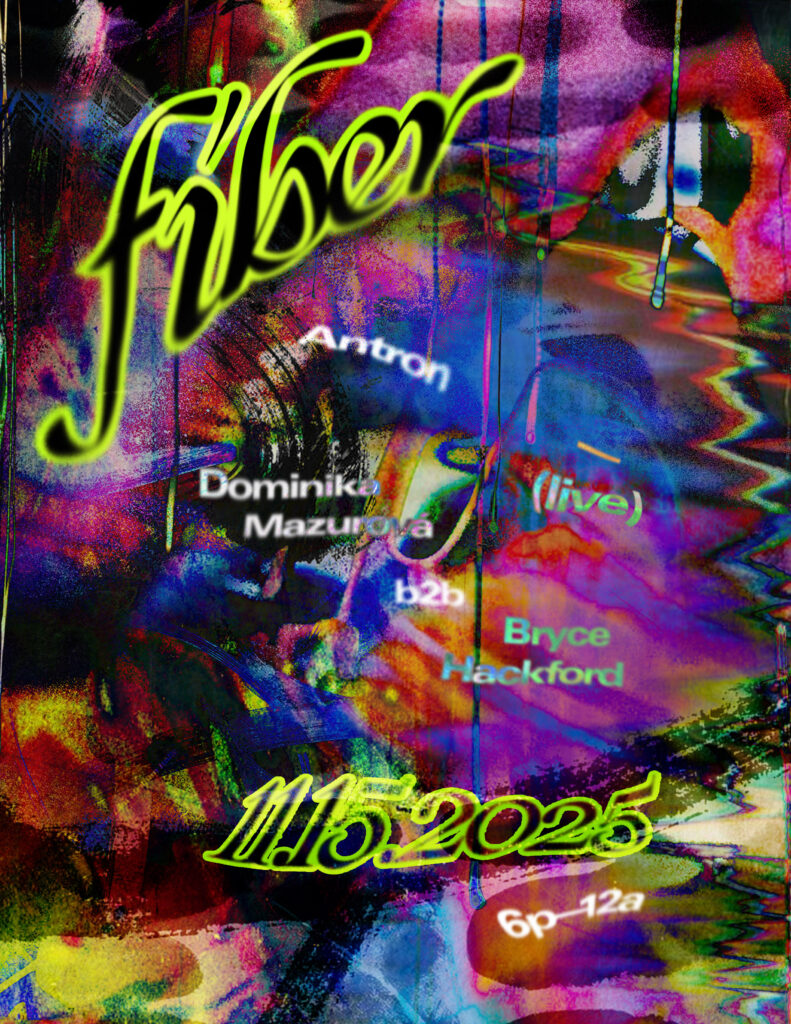
Coaxing us into the night is Antron, the NYC native and longtime host of Basal Rate on 8 Ball Radio. We’ve shared so many of the best dancefloors with him over the years, and his knowledge of dub, ambient techno, and machine funk is deep and goes through all of the decades. His newer all-vinyl sets are filled with a physicality and depth of texture that is going to sound symphonic on the Klipschorns.
Next is a live set by —, who will be premiering two new multimedia pieces with us. NOTE: there will be wild strobes and flashing lights, so beware! Their last piece, as ics, was a profound work on the fragility of our huge mechanical systems, specifically airlines, and the humane response when they fail, as they inevitably do. It was totally engrossing and a meaningful antidote to the helplessness that we’ve been feeling. This performance will blow minds and rattle bones as well, assuming it follows their usual thick ghost-in-the-machine electro: bright, loud, pretty, and driving, yet the new work is made with one constraint, it has no “percussion.”
Bringing us through the dance is a b2b from partners Bryce Hackford and Dominika Mazurová. Bryce and Dominika have both played some of our favorite Present Sounds at the studio and we’ve seen them play killer dance sets separately, but we’ve never got to see them play together, and are excited to hear two people who know each other really well and know the system well really dig in. Bryce’s productions range from haunting, richly-harmonized drones to live inside of, to really left-field and lofi varieties of house music, and he’s played with some of Brooklyn’s best improvisers over the years, and Dominika has cracked open some of our favorite nights at the studio – for instance, with DJ Marcelle, Nono Gigsta, Elena Colombi – and she’s a sensitive weirdo after our heart that can go in any direction, and they’ve both played in the studio with their pal Nosedrip, so need we say more? Come prepared for a trip across time and space.
We have the Cultural Solidarity Project back tabling with us, helping bridge the realms of cultural production, mutual aid, and resistance to imperialism and an art that refuses to be co-opted. They are an organization that has been at the forefront of the ongoing Boiler Room boycott, and who support artists and activists facing repression for their artistic, vocal, and demonstrable support for Palestine. They’re actively recruiting people who wanna agitate at the intersection of culture and politics, which certainly is some of y’all. If you want to support them there is an add-on in the cart, which goes directly towards their mutual aid efforts.
As always, the food will be as life-giving and experimental as the music, so come early to feast.
LORE: ARTICULATION AND ENCOUNTER
Nightlife is a social life to many of us, and it’s usually a place of hedonism, but the social part of us craves more than simple escape, even while we all fucking need it. We love it for many reasons: the dazed feeling of the sunrise after a memorable night, the release and freedom in dancing with friends and hot strangers, and obviously the nasty bass. Whatever the reasons, including the inarticulable ones, nightlife is a place that has brought us so much joy and connection, and in connection is where political action is prefigured. It’s been a heartbreaking few years seeing what’s happening around both here in our communities and around the world, and it’s with us on the dance floor and on the streets, and in our phones and weighing on our souls. Connection doesn’t only happen in the inarticulate spaces of our release though; it can happen in holding space for others’ presence and their struggles, in listening to each other, in being a neighbor, in humanizing the people around us and taking responsibility for what happens in the immediate places where we live our lives.
We often discuss this open-ended ambivalence about nightlife and the peak or limit experiences that can happen on a dance floor, as well as the need that is planted in the people who frequent it. There is a lot of interesting long form writing about it published in the past few years that examine these questions in greater detail and eloquence, including Raving, Mean Boys, Together, Somehow, Health and Safety, and the collection Writing on Raving – shoutout to Hive Mind Books, a queer bookstore and coffeeshop and part of the Fiber fam, for hitting their one-year anniversary! Just casually, we notice that a lot of people we talk to about these secondary aspects of raving use the language of necessity to justify this endeavor to themselves – we need this, it’s for those who need it – for various reasons. This is also a group that has a high rate of substance use issues, let’s be honest, so we should acknowledge that we all have a complicated relation to the concept of necessity, it seems to be both an ideal and a crutch, and that maybe there are other lenses through which we can understand our relation to our communal experience of music and dance in extremis. Afterwards, as with psychedelic experience, there’s a fear that it was too much fun, that it didn’t amount to anything lasting, that our quick-to-fade afterglow and hazy memories of the events make us feel even more adrift in the face of the problems that we’ll confront for the rest of our lives, simply because the experiences we take away are not direct lessons in how to confront these problems.
Ravers often talk about nightlife as a type of resistance community, and we see the bonds behind nightlife to be the elemental foundation to the real actual work of the community-building of structure, support, and mutuality. We tend to think about the smaller cycles of “going out” (as it’s casually called, by casuals), and the larger ones (like Fiber), but also other regular and semi-regular DIY gatherings and larger still, festivals, as holidays that we’re imprinting on a calendar that’s been otherwise robbed of ritual and been put into the service of shit. We don’t take this ceremonial reclamation of our time lightly, but at the same time it doesn’t change anything, it’s simply the prefiguration of that change. That stated, the bonds we’ve made by raving are strong indeed. They’re formed in affinity, in togetherness, in vulnerability, and forged in the inarticulate crucible that can only be touched by our innermost selves. We’ve learned to listen to the silent voice of our bodies, to dwell in the overwhelming realm of our senses rather than in the much smaller sorting house of our comprehension. This cooperation through ambivalence is a strength when we live in a world so intent on zero-sum private comfort built over its lack in the lives of others, and the shiny bauble that misdirects from that reality. But come on, even the terms we use to describe our relation to the party — giving, serving, carrying — all indicate to another.
The possibilities of life expand when we foster a culture of relation over that of isolation. How do we make community more than just the affective relations we hold with one another, and embed them into structures and systems that provide the necessary long-term foundations for such cultural shifts? We’ve been thinking about ways that we can create more sustainable and long-term strategies around donations, as in seeds that can be planted. We met with some partners to discuss ideas around scaling mutual networks and solidarity, as well as collaborations with other groups, collectives, and DIY efforts emerging over the last months (support your DIYs!! >:o). This is the opportunity, now more than ever, for collective organization and care. We always say this, and almost nobody takes us up on this, but this is part of a conversation we’d like to be having, both in this space of articulation, and in public, in our space of encounter. Part of our hope is that Fiber becomes a community through a shared love of music, dance, and food, and the other part is that this community can become part of a greater community. We’re curious about what solidarity can emerge from the nightlife we all hate to love, and love to hate. Can music, dance, and food connect people in a way that extends beyond the hours and the setting of the party?
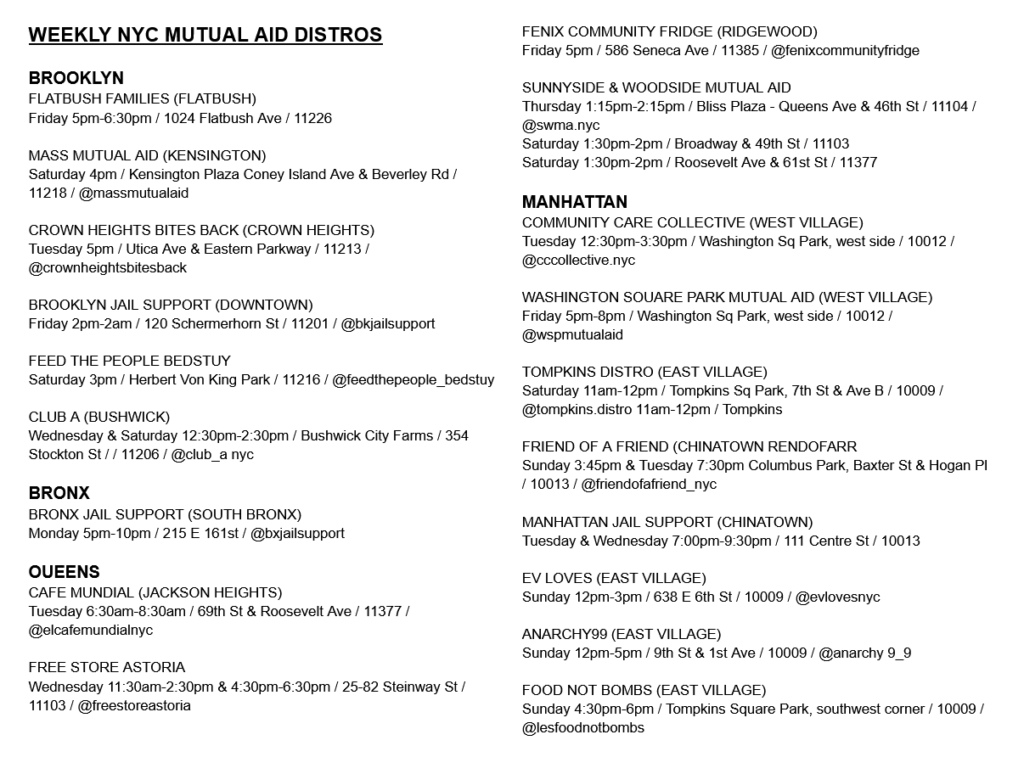
As you might have noticed, there’s always a donation link on the checkout page that goes to the community group that is tabling with us! We started this habit after we and all the DJs initially donated all of the profits from the first party to E-Sims for Gaza. We encourage attendees to talk to our friends who are tabling, as they’re typically the first-line of resilience out here, already engaged in the organized resistance and mutual aid on which any real support will be built, and we rely on their good work and experience. Recently the Rave Cafe hosted a talk at the studio about mutual aid and food justice that included workers in community gardens and community fridges, as well as in food rescue, where, amidst a greater enlightenment of what food justice means and what it takes to get there, Benham from Astoria Food Pantry said: If every able New Yorker committed to one hour of mutual aid a week, somewhere within a ten minute walk of their house, it could fundamentally change this city in terms of resources and how people connect with each other and this place; you change NYC and you have a shot at changing the heart of this country.. SNAP benefits end for many in November because of the shutdown, and around 14% of NYC is reliant on these. There are mutual care resources available in the city, and it’s important that we all see our engagement in mutual aid involves asking for help as well as being able to offer it. The Rave Cafe event highlighted these ones in particular, but there are more, and all of the people involved in these efforts contain a wealth of information on where you might participate closer to you: The Community Fridge Finder, NourishNYC, The Astoria Food Pantry, and The People’s Bodega.
The studio is also currently holding a course called Intro to Worker Cooperatives for Nightlife Workers, that discusses solidarity economies like these, but directly related to imagining and building nightlife alternatives to the ones that no longer, and maybe never really, serve us.